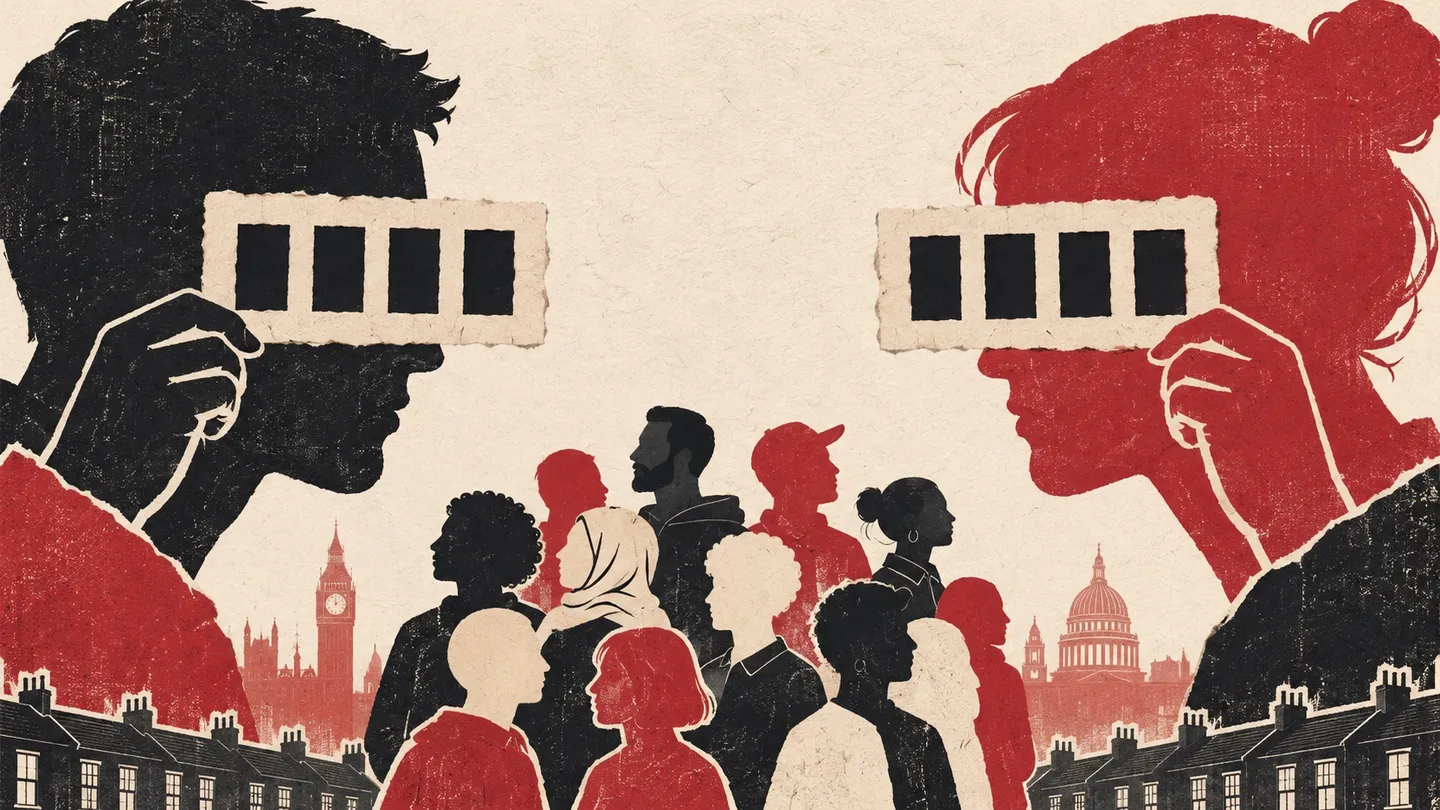
I've been thinking about why arguments over immigration and British identity so often go nowhere. A racist and a certain kind of "woke" progressive often make exactly the same assumption: that someone's race tells you what they believe and whether they belong here.
The racist uses that assumption to blame everyone who looks alike for the behaviour of particular people. The progressive uses it to dismiss criticism of a culture as an attack on everyone of the race associated with it. Neither seems to have the critical thinking skills to understand that someone can look like a group of people and disagree with almost everything they believe.
I think both ways of thinking are damaging to a country trying to bring people together. One keeps people out regardless of how much they belong. The other makes it difficult to challenge beliefs and behaviour that prevent people from living together. Both are judging people by race, even when one of them thinks they're doing the opposite.
That's why I'm a civic nationalist. I want a country where people of any ancestry can belong, provided they actually want to be part of it.
What I mean by civic nationalism
Wanting lower immigration, protecting British values and securing the country's future aren't inherently racist positions. A civic nationalist can want all of those things while accepting people of any ethnicity as fully part of the country.
Someone can also want lower immigration because they're worried about competition for jobs, rents and house prices, the benefits bill, or pressure on their local GP, schools and hospitals. Those are perfectly legitimate things to argue about, and none of them requires you to dislike people from another country. I'll leave the economics for another article.
There are ethnic minorities who share the same culture and loyalties as the native population, with very little to distinguish them apart from appearance. They're one of us. Wanting to reduce immigration doesn't mean wanting those people gone.
Where civic nationalists draw the line is with people who have no intention of becoming part of the country they've moved to.
Accepting liberal democracy and equal rights is a basic requirement. But Britain has a culture beyond its political system. England, Scotland, Wales and Northern Ireland have their own traditions and identities too. People have attachments to the places they grew up in, shared experiences and familiar ways of getting along. Those things matter, even when they're difficult to put into a citizenship test.
Millions of Americans, Germans or Swedes arriving within a short period would still change Britain considerably. They might find it easier to integrate because we already share a great deal, but people could reasonably object to the scale of that change. You can agree with someone about democracy and still want to live in Britain rather than America.
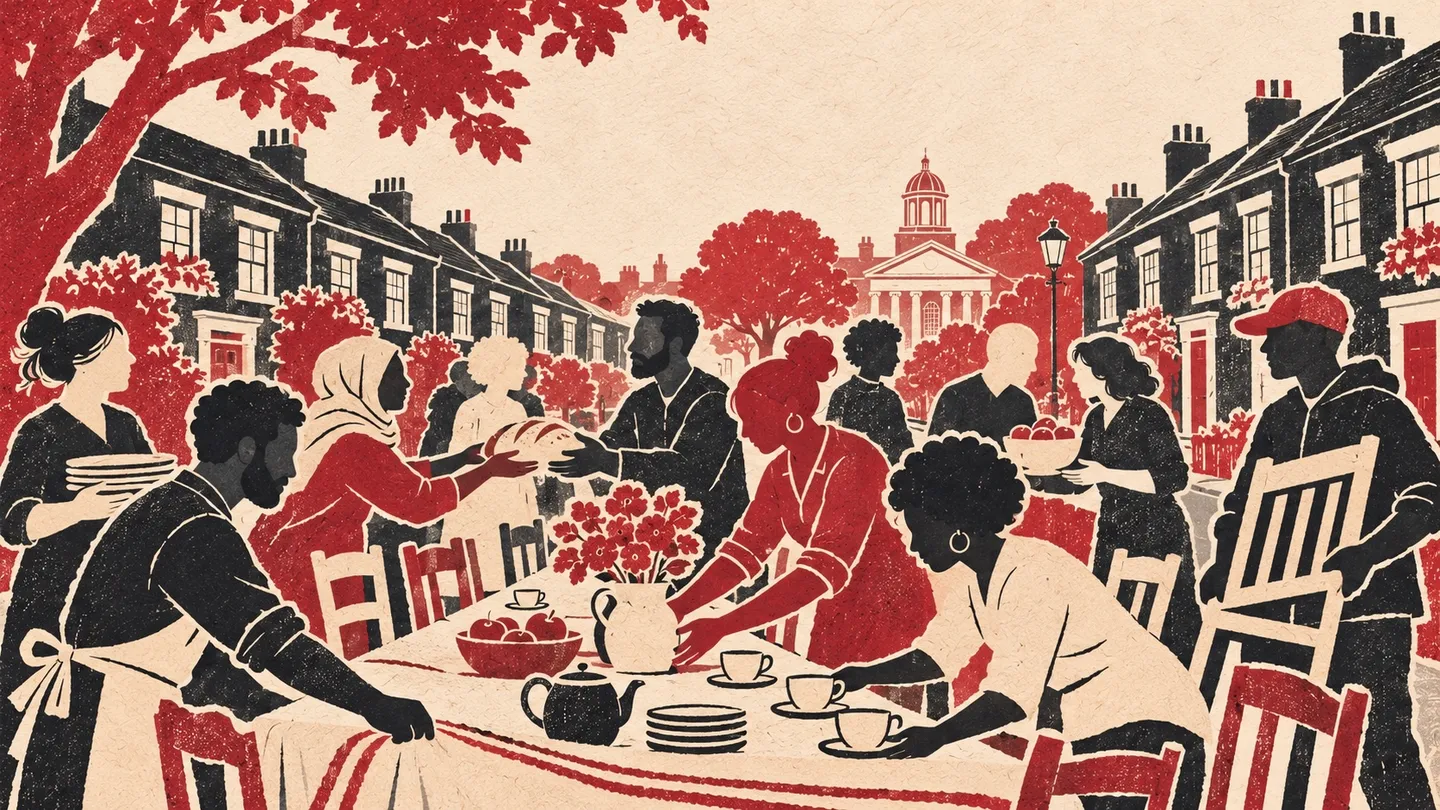
I think people settling here should be willing to become British: learn the language, understand the customs and take part in life beyond their own community. They should develop some loyalty to the place and accept that moving here involves adapting to it.
That doesn't require them to forget their family history or abandon every tradition they grew up with. But becoming British has to mean something beyond living in Britain. Someone of any ancestry can make that effort.
Where the thinking stops
People pass their culture on to their children. Sometimes it survives for generations, even after a family moves to a different country. We all recognise that people from the same background will often have a lot in common.
That's part of why stereotypes exist. They can reflect something people have encountered, although they can also be exaggerated, outdated or simply wrong.
But a stereotype won't tell you what an individual actually believes.
Someone might look like the people you associate with a particular culture and have almost nothing in common with it. Their parents might have rejected it. They might have rejected it themselves, or grown up in circumstances that gave them an entirely different outlook.
The racist doesn't want to know. They've seen the face and made their decision.
The progressive I'm talking about makes the same assumption from the other direction. Criticise a belief and they'll accuse you of attacking a race, including people of that race who might agree with every word you've said.
Imagine spending years opposing something within your own community, only to have some idiot explain that criticism of it is racist. They've put you back in the same category as the people you're arguing against and decided they're defending you.
You should be able to say that a belief is incompatible with life in Britain while accepting someone of the same ancestry who doesn't hold that belief. It shouldn't require a seminar.
Instead, the racist refuses to accept the person who doesn't fit their prejudice, while the progressive objects to making the distinction at all.
"One of the good ones"
This is why I don't think "one of the good ones" deserves the automatic ridicule it gets.
I know how someone can use it to preserve a prejudice. If every person who contradicts what you believe gets treated as an exception, perhaps you should reconsider what you believe.
But I think people often know exactly what they mean when they say it. Some people would fit into Britain well. Others wouldn't. You can't tell which by looking at them.
I'd much rather admit someone who wants to work, join in and live by the same rules as everyone else than someone who despises the country. Why wouldn't we want immigration policy to tell the difference?
I don't understand why that should be embarrassing.
Yet the phrase has become such a joke that people can seem reluctant to admit they want us to accept people selectively. They feel obliged to defend everyone associated with a group, including people whose behaviour they'd never tolerate from anyone else.
That's damaging to the people who do fit in as well. It lumps them in with people whose beliefs they may have spent their whole lives arguing against.
Someone who left a restrictive community because they wanted a different life probably understands the distinction better than the person telling them it's racist to make it. They shouldn't have to sit through a lecture from someone too pleased with their own tolerance to listen.
Why I think multiculturalism is dangerous
When I criticise multiculturalism, I'm talking about the idea that a country can accommodate fundamentally incompatible ways of organising society without expecting people to accept a common culture.
Ethnic diversity doesn't bother me. People of different ancestries can share a culture and feel that they belong to the same country. That's the whole basis of the argument I'm making.
Forced diversity is another matter. I've experienced this working in advertising, being told an advert couldn't run with white people in it. At that point, I think you've crossed into damaging virtue signalling. You're excluding people because of their race and expecting to be congratulated for it.
I suspect that's a large part of what people object to about DEI, or EDI as it's usually called here. They can be perfectly comfortable with ethnic diversity while resenting decisions that treat being white as a problem to correct. Those are different positions, however convenient it might be to pretend otherwise.
But that's probably another article.
A country needs a shared culture that people joining it are willing to become part of. Liberal democracy provides some of the basic rules, but there's more to belonging than accepting those rules. You can support free elections and still spend your whole life treating the country around you as foreign. I want people who settle here to make an effort to join in, and I think Britain is entitled to expect that.
There's plenty of room for different religions and traditions. But if your culture says you can take away someone else's freedom, Britain shouldn't accommodate that.
There are obvious examples.
Under the Taliban, girls in Afghanistan are barred from education beyond primary school. That involves a belief that a girl's opportunities should be restricted because she's female. Someone who wants to impose that here would be denying their daughter rights we'd insist upon for anyone else's. UNESCO
Pakistan's blasphemy laws provide for imprisonment and, for certain offences, death. If you believe someone should be imprisoned or killed for insulting your religion, you reject a basic freedom that allows different beliefs to coexist. You can't reasonably expect freedom to practise your religion while demanding punishment for people who criticise it. European Union Agency for Asylum
Forced marriage is another example. A family deciding that its wishes take precedence over someone's consent is denying that person control over their own life. Calling it tradition doesn't change what happens to the person forced into the marriage. Free and full consent is the standard we should defend. United Nations
The same applies to female genital mutilation. It causes harm, has no health benefits and violates the rights of girls and women. No community should get an exemption because the practice has been passed down through generations. World Health Organization
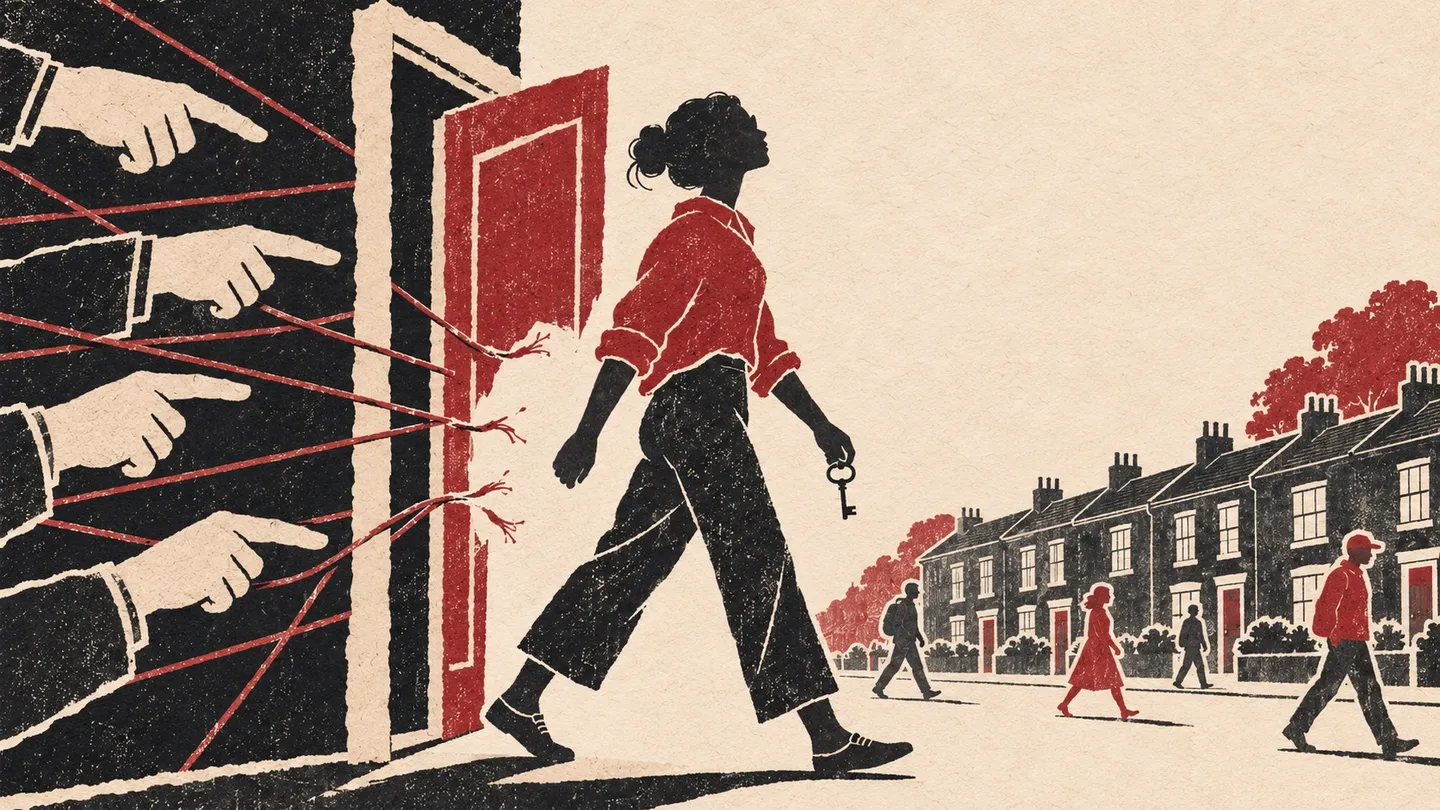
You can add threats against gay people, violence against relatives accused of bringing shame on a family, or intimidation of someone who leaves a religion. In each case, someone is claiming authority over another person's freedom.
You can follow whatever strict rules you want in your own life. You don't get to force everyone else to follow them. You can believe a relationship is sinful and still accept that the people involved have the right to live as they choose.
If you intend to force your daughter into marriage, punish someone for leaving your faith or use threats to stop criticism of your beliefs, I don't think Britain should admit you to settle here. Nor should we welcome people who actively support others doing those things and want them accepted here.
For people already here, the same expectations should apply regardless of citizenship or ancestry. We should protect those being threatened and hold those responsible to account.
If someone has left an oppressive community and come here for freedom, we owe them more than telling their old community leaders that we respect their right to carry on as before.
It isn't as simple as being born here
None of this means a passport or a British birthplace proves that someone has integrated.
We have communities whose families have been here for generations and who still live quite separately from the wider country. Irish Travellers are an obvious example of a distinct community that can't be understood by looking at skin colour. Similar questions arise in some British Asian communities.
But having your own traditions doesn't automatically put you at odds with Britain. We need to be clear about what we're objecting to. A different accent is one thing. Intimidating women or threatening people over their beliefs is another.
The same goes for Black British culture. If the concern is gang violence or homophobia, we should discuss those things specifically, and apply the same standards wherever we find them.
Otherwise we're doing exactly what I'm arguing against: using a broad group identity to avoid thinking about the people involved.
What do we mean by English?
The English exist as an ethnic group. Having mixed historical origins doesn't make them imaginary. Over centuries, earlier inhabitants and successive arrivals became a distinct people with a shared history and culture.
There's also a serious historical argument for England being among the earliest nations. Adrian Hastings went further, describing England as the prototype of both the nation and nation-state. You don't have to agree on its precise starting date to recognise that there's a people here with a history of their own. Hastings, *The Construction of Nationhood*
Apply the argument elsewhere and the problem becomes obvious. If someone claimed that the Welsh, the Navajo or the Aboriginal peoples of Australia didn't exist as distinct peoples because their identities had developed over time, they'd rightly be challenged. Depending on the circumstances, they might be accused of trying to erase those identities.
Apparently some people find this much harder to understand when the group is English.
We recognise that these peoples have something worth preserving. English identity deserves the same basic respect.
That doesn't mean I need to know someone's ancestry before I decide whether they belong here.
Someone can have different ancestry and be culturally English. They can grow up here, share your values and understand the place in much the same way you do. They can be British citizens whose home and loyalties are here. If they're your friend or your neighbour, you're probably going to care far more about whether you get on and understand each other than what a DNA test would say.
That's why I think a lot of these arguments are mostly semantic.
Someone says they're English, meaning their culture and upbringing. Someone else hears a claim about ethnicity and objects. The first person feels they're being told they don't belong; the second feels they're being asked to deny that the English exist as a people.
Say "culturally English" and "ethnically English" and much of the disagreement may disappear. We have the qualifying phrases, but the word people actually use is the same.
I can recognise someone's different ancestry and still regard them as one of us. That's entirely consistent with the civic nationalism I'm arguing for.
Caring about your own
I don't think it's shameful to want your descendants to have a future in the country your ancestors came from. That seems a fairly normal feeling. People want their children to inherit somewhere they recognise, with some connection to the lives that came before theirs.
Of course that attachment can become an excuse to mistreat outsiders. But caring about the future of your people doesn't automatically mean you think everyone else is inferior.
My difficulty with ethnic nationalism is how you'd make it work fairly in Britain now. People have moved around and had families. Millions have made their lives here, and their children often have nowhere else they'd consider home.
Are we going to tell them that however much they love the country, they'll never belong because of their grandparents?
I can't get behind that. Their children have a future here too.
But finding a way to live together involves some effort from everyone. If a British person whose family arrived with Windrush talks about slavery as something "the British" did to "our people", it's reasonable to ask who they mean.
Demanding an apology from living white people because of their ancestry is something else. It puts people into opposing groups regardless of what any of them has actually done.
You can't expect neighbours to trust each other while blaming one of them for something their ancestors did.
The backlash
And when I say racist, I don't just mean white racists.
I'm seeing more hostility towards white people, sometimes from people who would be furious at the same language directed at anyone else. Their usual concern about judging people by race seems to disappear when they approve of the target.
I think that has contributed to the backlash on the right. Parts of the cultural left moved a long way, very quickly, and became remarkably intolerant of people who hadn't moved with them. Concern about immigration became suspect. Affection for Britain became something to explain away.
Then people encountered contempt for their own background and found that those most vocal about racism often wouldn't acknowledge it.
That doesn't excuse anyone becoming racist in response. But it does help explain why they're willing to listen to someone who recognises the grievance.
I also don't buy the idea that white Western populations are especially racist. An analysis of American survey data found much smaller average preferences for their own race among white respondents than among the other groups examined. Younger white respondents actually rated other racial groups more warmly, on average, than their own. Analysis of the 2020 American National Election Study
There are international differences worth acknowledging too. In Gallup's earlier survey wave, 68% in Britain considered an immigrant marrying a close relative a good thing, compared with 12% in Pakistan and 8% in Afghanistan. Britain's figure reached 76% in 2019. Canada recorded 91% that year, and the United States 85%. Gallup's international results, UK figures, Canada and US figures
That doesn't prove who's the least racist. But Britain clearly isn't a country where most people recoil at the thought of an immigrant joining their family.
It's also entirely possible to be comfortable with someone from abroad joining your family while wanting much lower immigration overall. I can like my neighbours and still want lower immigration.
Who we admit
Integration takes time. If people can live their whole lives without learning English or forming relationships outside their own community, we shouldn't assume another generation will automatically become more integrated. The pace of arrivals and the expectations we set matter.
But we also need to take much more care over who we admit in the first place.
Someone coming from a country where oppressive practices exist may hate them. They may want a different life for their children. Someone of the same ethnicity who grew up in Britain may support them.
You can't tell by looking at either person.
That's why I want much more stringent screening and selection, with proper checks on who people are, their backgrounds and whether they're prepared to accept how we live here. Looking at their face won't tell us any of that.
It's also why I want entry into the country controlled through lawful routes. Everyone entering should be identified and subject to the checks we require. Arriving illegally shouldn't provide a way around that process or allow someone to remain without scrutiny.
No screening process will tell us everything someone believes. But that hardly means we shouldn't make a serious effort, or that wanting to be selective is racist.
I want us to distinguish between people who would become part of Britain and people who would bring beliefs and practices that undermine the freedoms we expect here.
The racist won't give the individual that consideration because they've already judged everyone who looks like them. The progressive I'm criticising won't allow the distinction because they regard criticism of the culture as an attack on the race.
They both lack the mental capacity to understand the nuance around the conversation. "Common sense" is clearly something that doesn't come naturally to some.
We should be able to say we want "the good ones", meaning people who will respect the country and the rights of those around them. We can argue about how to assess that fairly and what integration should involve. We shouldn't be embarrassed about wanting to be selective.
I can consider someone of a different ethnicity one of us and still think someone of that same ethnicity would be a terrible fit for Britain. I don't see why that's so difficult to understand.